

Laurene van Dijk assessed waterhole quality on a recent trip to Tswalu Kalahari Reserve in the Northern Cape, where she conducted fieldwork for her honours project. She aims to assess how waterhole construction in semi-arid regions might increase the potential for toxic blue-green algal blooms. As temperatures increase and surface water becomes less available due to unpredictable rainfall events associated with climate change, animals will need to visit artificial waterholes more regularly. In addition to determining which animals wade into the water to drink, thereby often contributing nutrients required for algal blooms, Laurene aims to assess which species might be at higher risk of effects from algal blooms when utilizing those waterbodies.
MRI Nominees Contend for NSTF - South32 Lifetime Award

The National Science and Technology Forum (NSTF) annual awards recognises outstanding contributions to science, engineering, technology (SET), and innovation. Known as the ‘Science Oscars’ of South Africa, the NSTF-South32 are the largest, most comprehensive, and most sought-after national awards of their kind in SA.
This year, the MRI is proud to be represented by two nominees who will be contending for the coveted NSTF-South32 Lifetime Award in Prof. Andre Ganswindt (Professor and Director: Mammal Research Institute) and Prof. Nigel Bennett (Chair at Austin Roberts of Mammalogy; and Professor: Mammal Research). The MRI wishes our two esteemed nominees the best of luck at this year’s prestigious event!
See the full list of nominees across all 15 Award categories here: https://nstf.org.za/current-nominees/
MRI Honours Student Conducts Camera Trapping in Tswalu Kalahari Reserve
Some interesting footage of a bat eared fox (Otocyon megalotis) captured on a recent field campaign by honours student Mattheus Louw at Tswalu Kalahari Reserve in the Northern Cape. His study, funded by the University of Pretoria and the Tswalu foundation, aims to determine which secondary species visit communal defaecation sites like rhino middens and hyaena latrines in semi-arid regions, and what drives them to do so.

African wild dogs will soon have their own sperm bank – how artificial breeding will help them survive

© Bruce CROSSEY
Scientists at the Institute for Breeding Rare and Endangered African Mammals, in collaboration with the Mammal Research Institute, are striving to protect endangered African wild dogs. As the species faces habitat loss and disease threats, the team are pioneering a novel approach to conserve wild dogs: freezing sperm from genetically diverse males for artificial insemination. This breakthrough aims to bolster genetic diversity, crucial for survival in fragmented habitats. With high hopes for disease resilience and population sustainability, this innovative method offers a cost-effective solution to conserve this iconic species, promising to revolutionize wildlife conservation strategies and secure a brighter future for African wild dogs.
Read more about this groundbreaking inititiave in an article written by MRI Fellow Dr Damien Paris in The Conversation here.
Open call for student mobility in the Czech Republic with Erasmus+

For more information on the open call please contact Dr Tersia Needham (needham@ftz.czu.cz)
Empowering African Environmental Science: The Jennifer Ward Oppenheimer (JWO) Research Grant Seeks Another Trailblazing Recipient

The Jennifer Ward Oppenheimer Research Grant (JWO Grant) aims to empower African environmental science by honoring the legacy of Jennifer Ward Oppenheimer. With Africa historically underrepresented in global research, this grant seeks to bridge the gap by providing resources and support to early-career scientists across the continent. Now in its sixth year, the JWO Grant encourages scholars to tackle pressing environmental challenges, from biodiversity conservation to microplastic pollution and disease vectors. As the JWO Grant enters its next phase, it invites passionate environmentalists to apply and contribute to shaping Africa's environmental future.
The 2024 JWO grant of $150,000 (USD) will be awarded to one successful applicant. The grant will support a research program of up to three years. There will be an annual call for new applications (previously funded research will not be eligible), and the grant recipient will be announced at the Oppenheimer Research Conference on the 10th of October 2024.
To apply for the grant, click here.
Applications are open from the 2nd of April 2024 to the 3rd of May 2024.
Can electro-ejaculation cause greater stress than regular handling?

Photo: flickr
While exploring the stress implications of electro-ejaculation versus routine handling in sheep breeding, researchers from the University of the Free State and the Mammal Research Institute examined a means to minimize stress during the procedure. This, while still ensuring semen quality for breeding success.
The team demonstrated that semen quality remained unaffected by the collection method, indicating its resilience to stress. During electro-ejaculation, however, Rams occasionally exhibited increased nostril flaring, hinting at potential stress. Remarkably, animals given a 10-second rest interval exhibited notably lower cortisol levels, suggesting a promising avenue for stress alleviation. This study advocates for refining of electro-ejaculation techniques, with for example, extended rest intervals for Rams in order to address ethical considerations. These results led the team to underscore the necessity for further research before contemplating a complete ban of the controversial electro-ejaculation practice.
The findings of this study not only deepen our understanding of production animal welfare, but also highlight the delicate balance that is required between innovation and compassion in agricultural practices.
Read the full article published online in Farmer’s Weekly here.
Osnabrück Biology Master's students visit MRI

During their the summer semester of 2023, twelve master's students from Osnabrück Biology travelled to South Africa as part of the excursion module in Behavioural Biology. Led by Prof. Dr. Chadi Touma, the group spent two weeks exploring South Africa. During this time they visited the Mammal Research Institute at the University of Pretoria, and took part in practical field-based activities.
You can read more about the time that the group spent in South Africa here.
MRI Students End 2023 On a High

The Mammal Research Institute topped off 2023 with a strong student showing at the Annual General Meeting of the Department of Zoology & Entomology at the University of Pretoria. Oral presentations outlining research progress throughout the year were delivered by PhD students Bruce Crossey and Matthew Germishuizen; MSc Students Meghan van Zyl, Courtney Robertson, and Dylan Dobbins; and Honours students Chantel Schoeman and Bridget O’ Connor.
Special congratulations to Bruce Crossey, a student funded by the Oppenheimer Chair for Emerging African Scientists in Non-invasive Wildlife Research, who was the awarded 2nd place in the PhD student oral presentation category for his presentation, “Safari Wildlife Tourism: Identifying Moments that Matter”.
Reflecting on the Oppenheimer Conference 2023
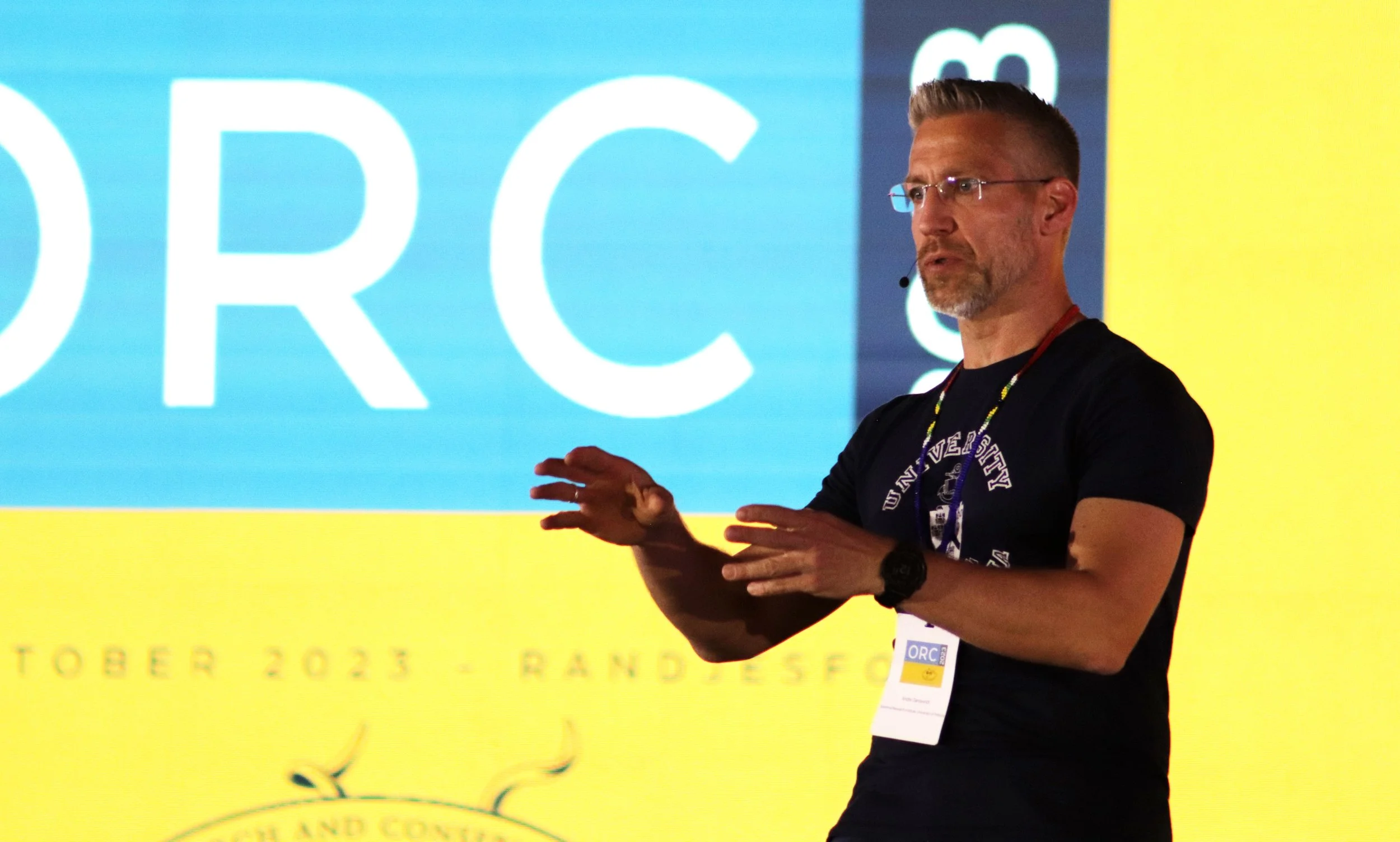
The 12th Oppenheimer Research Conference, held in Midrand from 4-6 October, brought together approximately 420 scientists, conservationists, and environmental stakeholders to discuss environmental and biodiversity research on issues facing South Africa and beyond.

The Mammal Research Institute was well represented at the conference, with MRI director Prof. Andre Ganswindt (holder of the Oppenheimer Chair for Emerging African Scientists in Non-invasive Wildlife Research), and Postdoctoral Fellow Dr Andrea Webster delivering compelling results presentations. Poster presentations were also given by Dr Grant Hall, Bruce Crossey, Pia Riddell, and Loraine Shuttleworth.
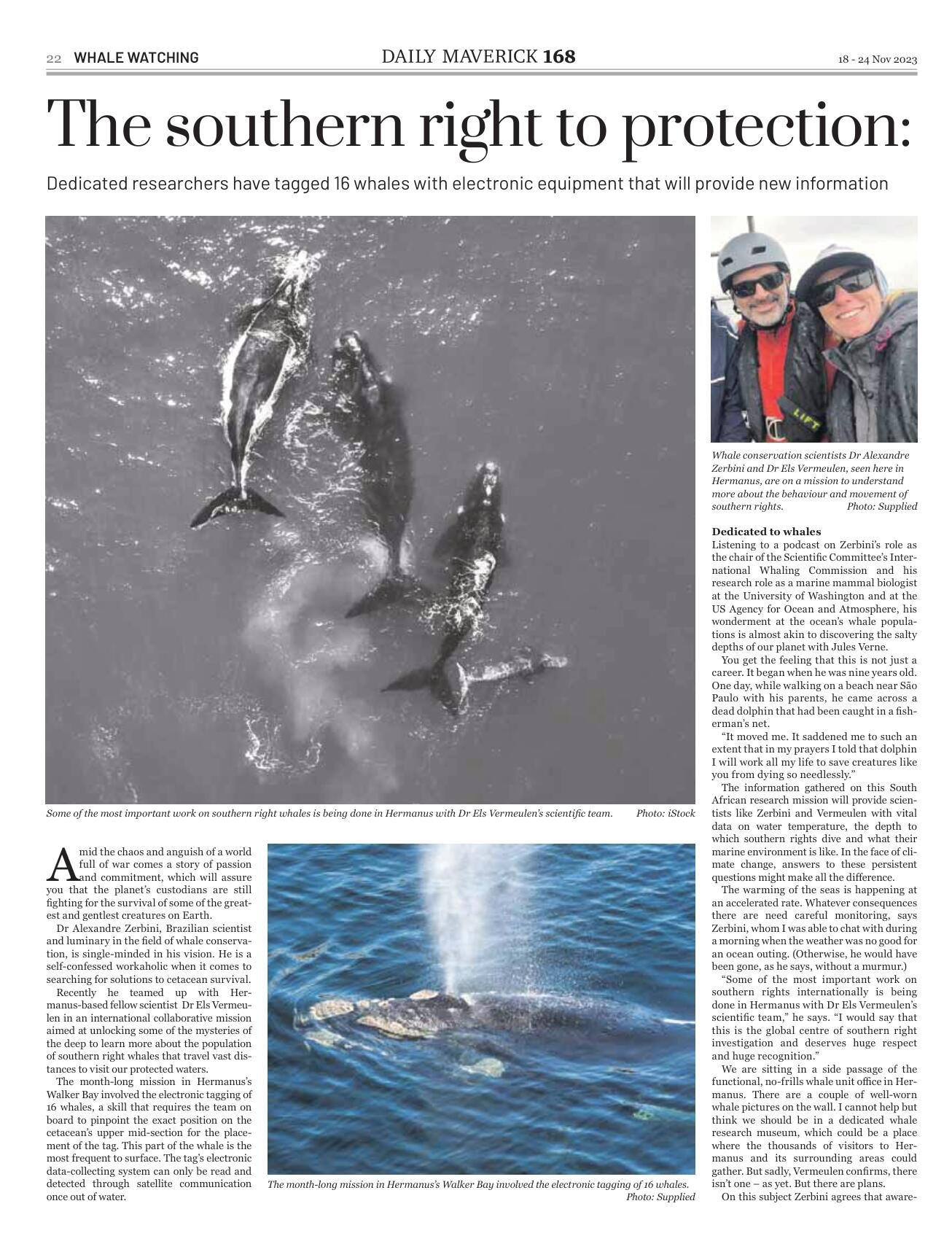
The southern right to protection: tracking the ocean's gentle giant

8th International Society of Wildlife Endocrinology Conference

Director of the Mammal Research Institute, Professor Andre Ganswindt, PhD students Tshepiso Majelantle and Lorraine Shuttleworth and PD Fellow Dr Andrea Webster recently attended and presented at the 8th International Society of Wildlife Endocrinology Conference, held in Jim Corbett National Park, India. The group travelled to various academic institutes including Ahmedabad University in Gujarat and the Wildlife Institute of India, Uttarakhand where they engaged with students and local researchers to discuss current work and future potential for collaboration.
Open Invitation: "Walking with Gorillas" Book Launch
Join Dr. Gladys Kalema-Zikusoka for the launch of her new book “Walking with Gorillas: The Journey of an African Wildlife Vet”, with discussant Jennifer Crwys-Williams. The event will be held at 18:00 on Monday the 7th of August 2023 at Exclusive Books Rosebank Mall. E-mail Events@Exclusivebooks.co.za to reserve your place.

MRI Postdoc awarded scholarship for training in Endocrine Disruption


Dr Andrea Webster, postdoctoral researcher with the Mammal Research Institute, recently received a scholarship to attend a 2-week training course on Endocrine Disrupting Chemicals at the Marine Biological Laboratory, Woods Hole, Massachusetts, USA. Dr Webster was one of eleven international students and early career scientists to attend this immersive course taught by a cohort of leading experts in the field of endocrine disruption.
Upon her return, Dr Webster said "I'm extremely grateful to have had this opportunity. I met the most inspiring group of people dedicated to such innovative and creative research and learned a great deal about the challenges related to working in this field. Endocrine disruption is something that affects us all, we have a lot to do in terms of equalising the social and environmental impacts related to this emerging global concern in South Africa.”
"When Science Meets Life" - Prof Andre Ganswindt and the OGRC

Prof Andre Ganswindt, director of the Mammal Research Institute, recently sat down with Yves Vanderhaeghen to discuss the importance of fundamental and applied research in the modern age. Click here to read the article and find out more about the work being done under the Oppenheimer Chair for Emerging African Scientists in Non-invasive Wildlife Research.
MRI Celebrates Africa Week at Future Africa

The Mammal Research Institute joined in on the recent Africa Week celebrations hosted by Future Africa, University of Pretoria. With the prestigious event bringing together an array of African and global scientific leaders in science, the theme for 2023 was “Open Africa, Open Science”. Student representatives from the MRI were on hand to discuss the work being done across their respective research groups, and to promote open dialogue with delegates attending the event. A massive thank you to all of the students who gave up their time to attend the event and share their exciting research!
MRI student awarded The Exploration Club Grant from The Explorers Club

Loraine Shuttleworth, a PhD student with the Mammal Research Institute Whale Unit, has been awarded the prestigious Exploration Fund Grant from The Explorers Club in support of her PhD fieldwork. Her project will evaluate the quality of lactation by South Africa’s female southern right whales to inform population health and growth rates.
This project will also use photogrammetric assessments and a variety of laboratory techniques including stable isotope-, fatty acid- and endocrine analysis. For this research, Loraine is also the recipient of the Society for Marine Mammalogy’s Small Grant in Aid of Research.
Congratulations Loraine!
Prof Michael Somers delivers inaugural address

Prof Michael Somers, Professor in the Department of Zoology & Entomology, Eugene Marais Chair of Wildlife Management, and the Mammal Research Institute (MRI), recently delivered his inaugural address entitled “Large carnivore management in southern Africa: challenges and opportunities”.
His lecture highlighted the many threats and challenges that large carnivores face. Drawing attention to how these issues continue to evolve, Prof Somers’ address called on all stakeholders to collaborate and respond responsibly in order to find meaningful solutions moving forward.
You can view Prof Somers’ inaugural address here.
UP Stable Light Isotope Lab to receive a renovation and upgrade

Dr Grant Hall is excited for the new UPSIL developments
We are pleased to announce some exciting news regarding the UP Stable Isotope Laboratory. We are getting an awesome renovation/upgrade and we will also be expanding our repertoire of stable isotope analyses. More details on these will be made available once all our equipment has been re-commissioned and tested. The planning stage is almost complete and the actual work in the lab should begin in the next few weeks.
Unfortunately, the renovations mean that the laboratory is currently not able to provide stable isotope analyses or any training. At this stage, we are not sure as to how long the actual work will take, but it is most likely that we will be back in action sometime in the second half of 2023. The UPSTIL Manager, Dr Grant Hall, will provide an update as to when this will take place and also give everyone interested details as to what the new and improved UP Stable Isotope Laboratory will have to offer.
Our apologies for not being able to assist with any analyses for the next few months, but Dr Grant Hall will be able to assist with any queries/questions relating to new projects and services.
MRI student awarded American Society of Mammalogy travel grant to attend IMC 2023
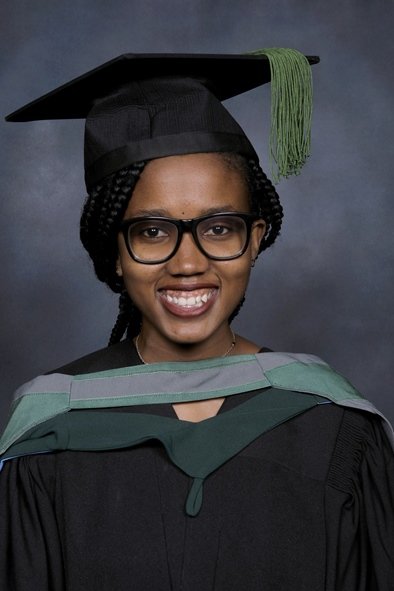
Tshepiso Lesedi Majelantle, a PhD Student at the Mammal Research Institute, has been granted the American Society of Mammalogists travel award for the global south to attend the International Mammalogy Congress in Alaska this July.
Reflecting on the award, Tshepiso remarked, “It feels so surreal! I keep waiting for the email that says it was an accident. But I am really looking forward to it, and I am exceptionally grateful for this once in a lifetime opportunity”.
We look forward to Tshepiso representing the MRI at this prestigious conference later this year, we know you will make us proud!