
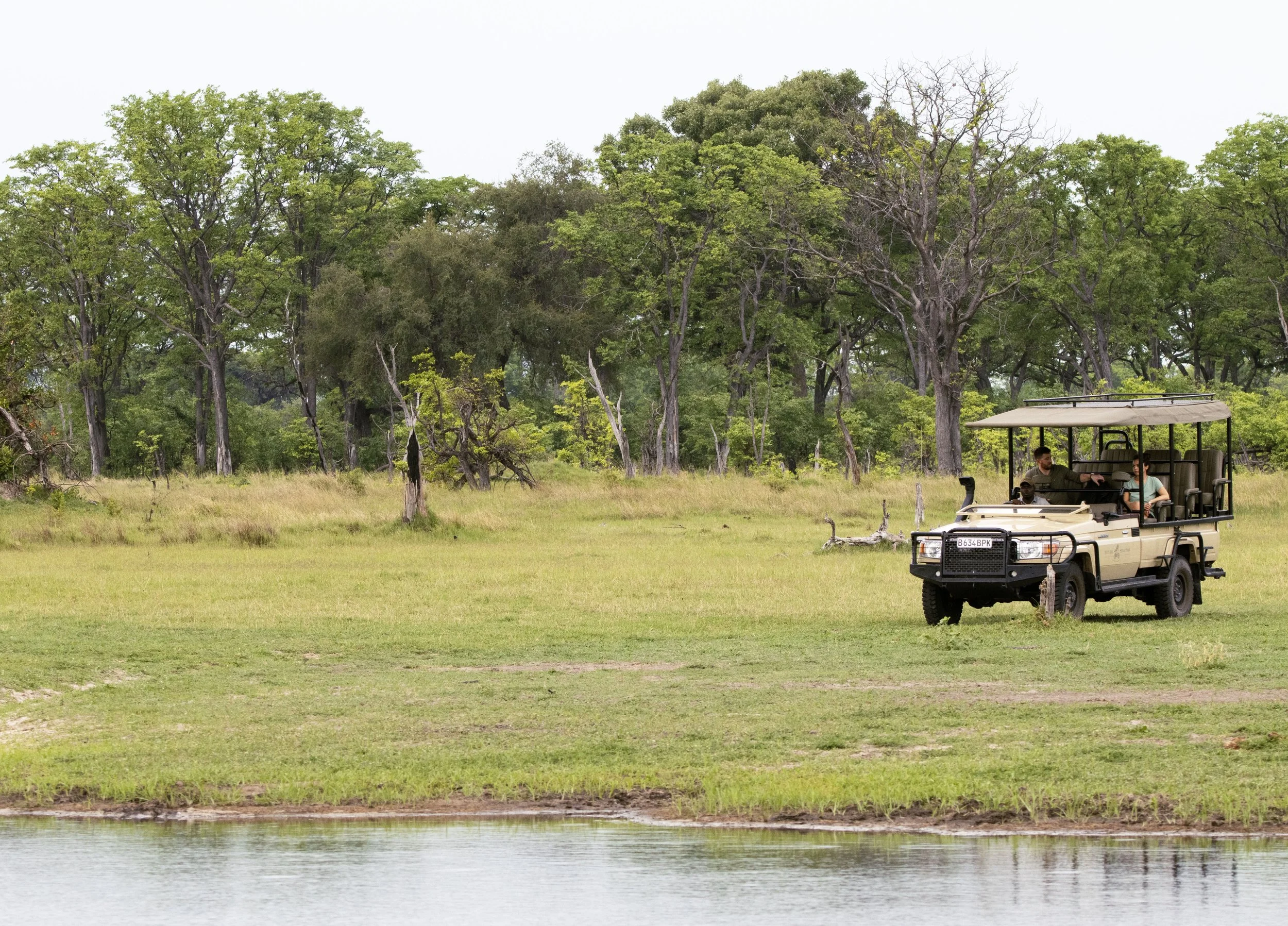
Image credit: Bruce Crossey
New research from the Mammal Research Institute (MRI) at the University of Pretoria is challenging long-held ideas about what truly excites us on safari—and the story has resonated far beyond academia. By revealing surprising emotional responses to wildlife encounters, research conducted by an MRI PhD student has attracted significant media attention across broadcast, print, and digital platforms, bringing the MRI’s work to a broad public audience.
Led by PhD student Bruce Crossey in collaboration with German ambulatory monitoring specialists Movisens GmbH, the study uses wearable sensors to measure tourists’ real-time physiological responses to wildlife encounters on safari. By capturing unconscious emotional reactions through electrodermal activity, the research challenges traditional survey-based approaches and long-held assumptions around the dominance of the “Big Five”, showing that novel sightings such as birds and reptiles can elicit even stronger emotional responses than charismatic megafauna.
Following its release, the research has been featured across radio, television, print, and online media:
Listen to Bruce’s Radio interviews here:
• SAfm
• HOT 102.7
• Radio 786
See the Television feature here:
• kykNET’s Groot Plaas TV
Read the Print & online coverage here:
• University of Pretoria RE.Search magazine
• Sentience Magazine (December issue)
• The Witness
This research was funded by the Oppenheimer Chair for Emerging African Scientists in Non-invasive Wildlife Research.