
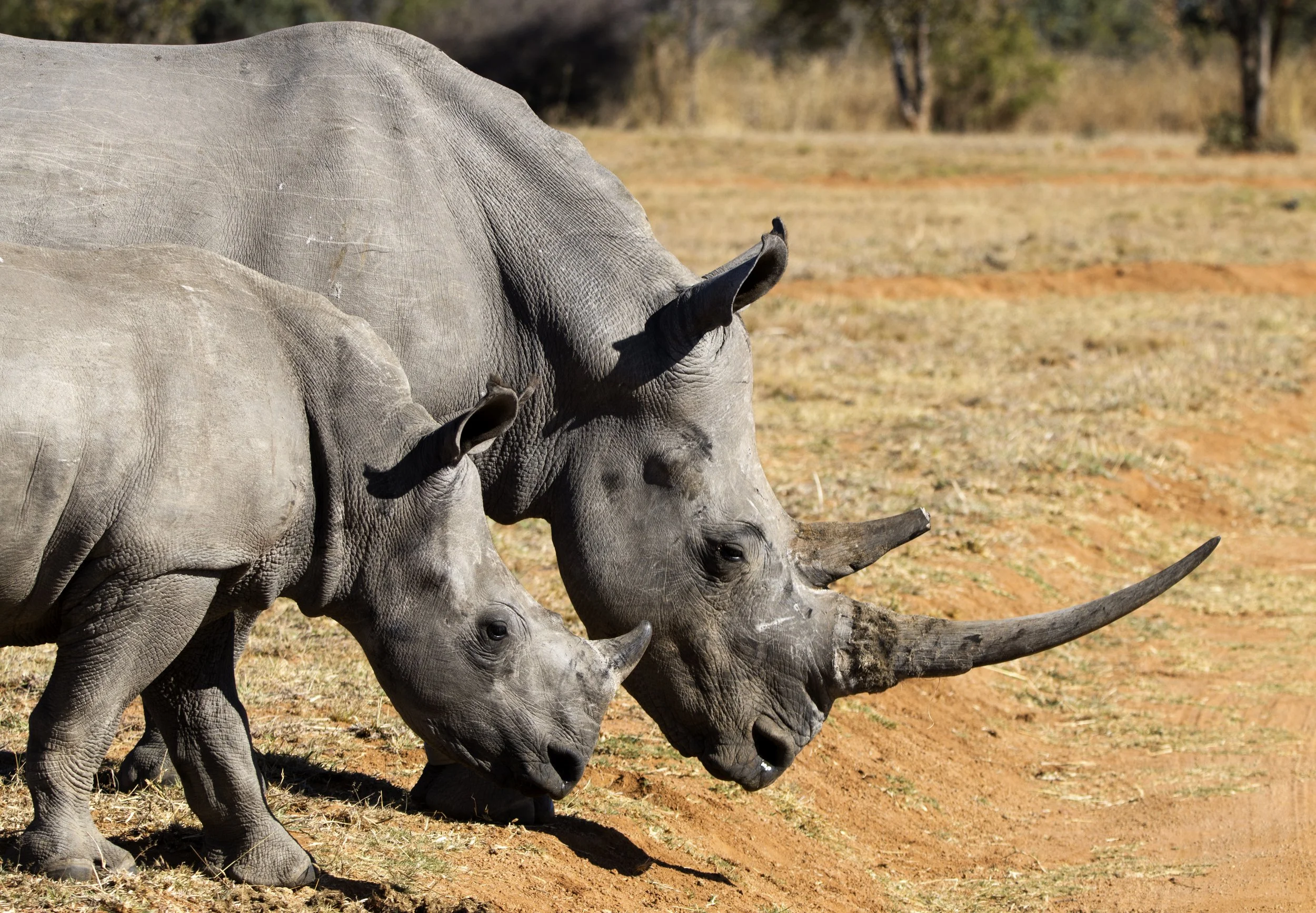
Rhinos ingest more soil when they graze than herbivores that browse on trees. Image credit: Bruce Crossey
Every mouthful of grass, leaves or roots comes with something extra: soil. New research from the Mammal Research Institute (MRI) at the University of Pretoria shows that this often overlooked detail can shape how different herbivores are exposed to naturally occurring toxic elements in their environment.
Led by MRI postdoctoral researcher Dr Andrea Webster, the study examined 16 African herbivore species at Tswalu Kalahari Reserve, revealing that grazing and burrowing animals ingest far more soil than browsers that feed higher in trees. The findings also link feeding behaviour and tooth structure to potential exposure risk.
For deeper insights into how animals interact with the soil beneath their feet. You can read Dr Webster’s full article in The Conversation Africa here and the full research paper in Science of the Total Environment here.